Fundraising
Fundraising Event Ideas That Actually Net Money: 20 Ranked
Published 27 August 2026
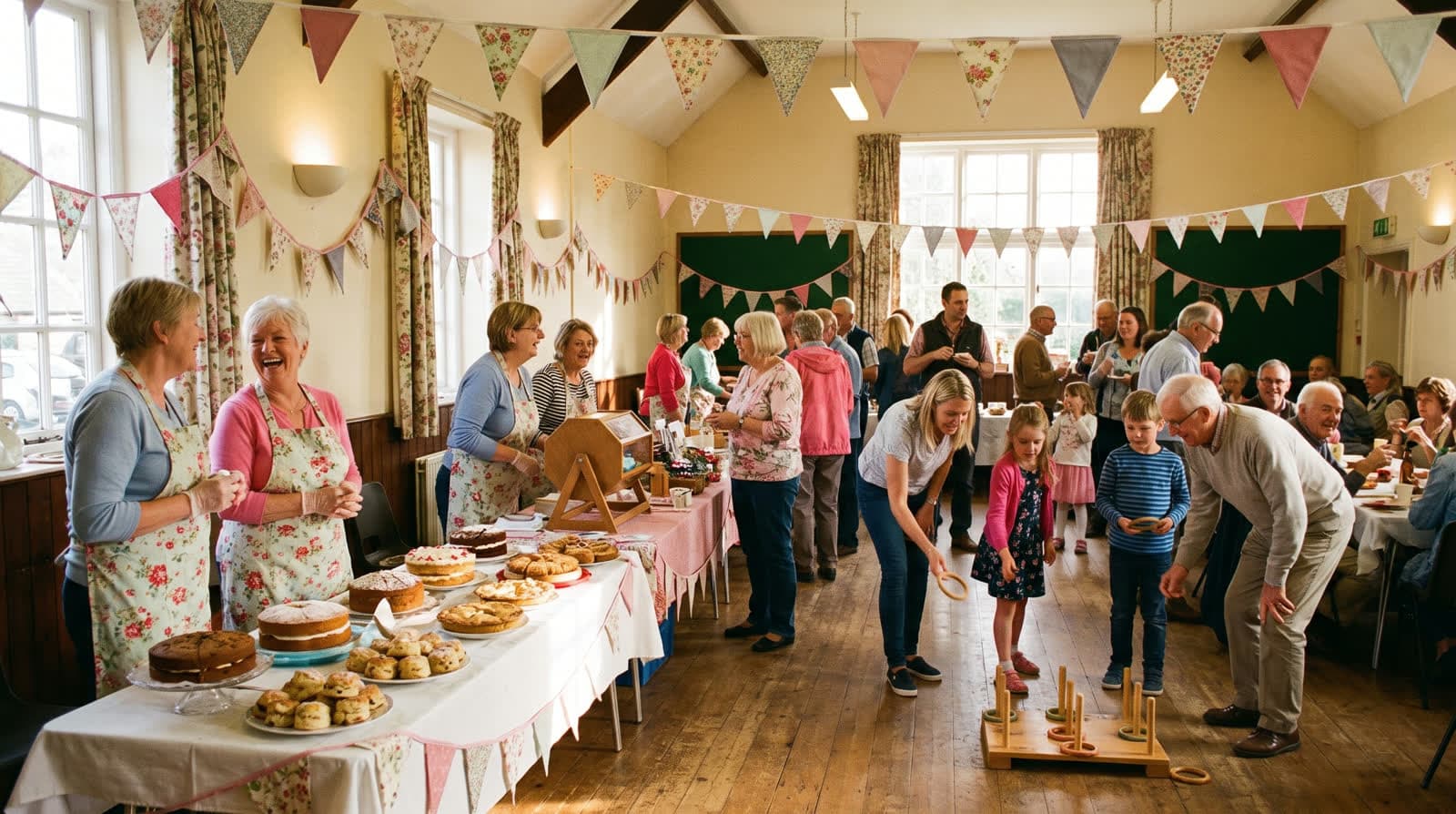
Most fundraising advice lists a hundred ideas and ranks none of them, which is how a committee ends up spending forty volunteer evenings on a summer fete that nets less than the quiz night nobody was excited about. This guide does the impolite thing and talks about money: twenty UK fundraising event ideas ranked by what they realistically clear — net, after the float, the card fees, the licences and the hall hire — against the volunteer hours they consume. One section below carries a declared commercial interest — it's flagged clearly where it appears, with the break-even sums that argue against booking anyone; discount that take accordingly. Everything else is the arithmetic your treasurer wishes someone had shown the committee before the first planning meeting.
Net, not gross — and the unit of effort
Two definitions before the table. Net means what actually lands in the charity account once you've paid the hall, the prizes you couldn't beg, the licence, the insurance top-up and the card fees — not the number on the poster. Effort is measured in volunteer evenings: roughly three hours of one person's time, because 'medium effort' means nothing and 'thirty-seven volunteer evenings' means a great deal. The figures are hedged deliberately — they reflect a school, club or village crowd of 100 to 300 people in the mainstream UK market as of August 2026, and your postcode, weather and committee will move every one of them. The ranking is by return on effort, which is why the biggest gross in fundraising sits at the bottom of the list.
20 fundraising event ideas, ranked by net vs effort
| Idea | Realistic net | Volunteer evenings | The catch |
|---|---|---|---|
| Non-uniform / dress-down day | £200–£600 | 0.5 | Schools and offices only — but the best hourly rate on this list by a mile |
| Auction of promises | £1,500–£4,000 | 5–7 | Needs one shameless auctioneer and a room that's already had a drink |
| Sponsored walk, run or swim | £500–£2,000 | 3–5 | Net is nearly all of gross; sponsorship fatigue among the same ten relatives is real |
| Quiz night | £400–£900 | 2–3 | Reliable and repeatable; caps out at the size of your hall |
| Grand raffle (tickets sold in advance) | £800–£2,500 | 4–6 | Needs small society lottery registration; prizes must be begged, never bought |
| 100 club monthly draw | £600–£1,200 a year | 1 a month | Slow, steady, unkillable — dies only when nobody owns the spreadsheet |
| Duck race | £500–£1,500 | 3–4 | You need a stream, a bridge and someone who genuinely enjoys counting ducks |
| Race night | £500–£1,200 | 3–4 | Filmed races and paper betting keep it legal — real bookmaking does not |
| Curry night / supper club | £400–£800 | 3–4 | Margin lives or dies on donated ingredients and BYO drinks |
| Bingo night | £300–£700 | 2–3 | Older crowds turn out reliably; check the small-scale gaming rules |
| Online silent auction | £500–£2,000 | 4–5 | Reach beyond the hall, but platform fees nibble 5–10% off the top |
| Tombola stall | £150–£400 | 2 | Near-100% margin if every prize is donated; a bin bag of chutney otherwise |
| Pay-to-play games stall | £150–£500 | 2–3 | Throughput is everything — see the stall economics section below |
| Plant sale | £200–£600 | 3–4 | Free stock if your growers start in March; a garden centre bill if they don't |
| Car boot sale (you take pitch fees) | £300–£800 | 3–4 | Weather-dependent and marshal-hungry, but sellers do the actual selling |
| Open gardens trail | £300–£900 | 4–6 | Charming, middle-class catnip, entirely hostage to one Sunday's forecast |
| Ticketed gig or concert | £300–£1,500 | 5–8 | Net swings wildly with the act's fee; free local talent changes everything |
| Bake sale | £100–£300 | 1–2 | Everyone's first idea; fine as a bolt-on, feeble as the main event |
| Car wash | £150–£400 | 2 | Honest money, wet volunteers, zero repeat mechanic |
| Summer fete | £1,000–£3,500 | 30–50 | The biggest gross and the worst hourly rate in fundraising — run it as a portfolio of stalls or not at all |
Hedged figures for a 100–300 person crowd, mainstream UK market, August 2026. Your gate, weather and committee will move every number.
The maths organisers skip
Most fundraisers don't underperform because the idea was wrong. They underperform because nobody did the unglamorous sums beforehand — and three of those sums come up every single time.
- The float. A fete with eight stalls needs £150–£250 in coins and small notes, sorted into tins, before gate opening. Forget it and your first hour of trading — the busiest hour — runs on IOUs and goodwill. Draw it from the bank two days early; Saturday-morning branch queues have killed more stall launches than rain.
- Card readers. A basic reader costs £20–£30 and takes roughly 1.7% per tap. That fee stings until you notice what it does to takings: almost nobody carries a tenner in cash any more, and a stall that can take cards generally stops turning people away at the exact moment they wanted to spend. One reader shared between stalls beats zero readers everywhere.
- Gift Aid. Genuine donations from UK taxpayers can carry Gift Aid — an extra 25p per £1 from HMRC — but purchases can't: raffle tickets, entry fees and cake all fail the test. Sponsorship forms with a Gift Aid declaration are the quiet exception, which is part of why the sponsored walk's net is so strong. If your cause is a registered charity, put the declaration on every sponsorship form and collect it properly.
Licences and insurance: the boring page that saves the event
This is England-and-Wales guidance in broad strokes, current as of August 2026 — rules move, Scotland differs, and your local council's licensing page is the final word. But the shape of it is stable. A raffle drawn at the event, with tickets sold only at the event, generally counts as an incidental lottery under the Gambling Act 2005: no licence needed, provided you spend no more than £500 on bought prizes (donated prizes are unlimited) and don't roll the draw over to another event. The moment you sell tickets in advance — the grand raffle model — you're running a small society lottery and need to register with your local authority, which costs around £40 in the first year and less to renew. It's a form, not an ordeal, but it must exist before the first ticket is sold.
Alcohol is similarly manageable if you start early. Selling drinks at a venue without its own licence needs a Temporary Event Notice: about £21 to the council, covering events up to 499 people, and it must be lodged at least ten working days ahead — which in practice means three weeks ahead, because councils count working days and you will not. Insurance is the one nobody checks until asked: village halls and schools usually carry public liability cover that extends to hirers' events, but 'usually' is doing real work in that sentence, and a one-off event policy costs roughly £50–£100 if the venue's doesn't stretch. Home baking sold occasionally for charity is broadly fine under food hygiene guidance, but anything prepacked needs full allergen labelling — a laminated ingredients card on the cake stall is cheap and covers the common-sense ground.
Pay-to-play stalls: where the margin hides
The most under-analysed line in fete economics is the games stall. Its business model is throughput: a go takes 30–90 seconds, costs £1–£2, and the stall's ceiling is simply goes-per-hour times hours. A well-run beat-the-goalie or coconut shy can put through 40–60 goes an hour with a queue, which is £250–£350 across a busy afternoon from one trestle table and a volunteer with a cash tin. The classic mistake is prize inflation — giving away £1.50 of merchandise on a £2 go — and the classic fix is the leaderboard: instead of a prize per play, one prize for the day's top score. A visible chalkboard leaderboard converts single goes into grudge matches, because nobody watches their name get knocked off the top without paying £2 to take it back. Repeat plays are the whole margin.
Declared interest: this is the bit we sell. Our hosted VR sports tournaments at MyVREvents are built to work as exactly this kind of paid-play stall — we bring the headsets, a host to run the queue and a live leaderboard, with golf, racing, archery and clay shooting the usual picks for a mixed crowd; each station needs a 3m x 3m corner and a socket, travel and the host are included with no surcharge for London, and we're not VAT registered so nothing gets added. But do the break-even sum before booking us or anyone: our evening rate starts at £395, which at £2 a go is close to 200 paid plays before your cause nets a penny. That's realistic at a big fete with proper footfall and a leaderboard doing its work; at a 60-person coffee morning it's a donation to us, and we'd rather say so here than in the debrief.
Stack ideas — one room, several nets
The last trick is the one good committees discover by accident: ideas from the table stack, and the venue cost doesn't. A quiz night is £400–£900 on its own; a quiz night with an incidental raffle at half time and a tombola by the door is three nets on one hall hire, one set of posters and one evening of everyone's time — often half as much again for barely any added effort. This is also the honest defence of the summer fete, bottom of the table on hourly rate: it isn't one idea, it's a portfolio of ten stalls sharing a single gate, and it lives or dies on whether each stall is run like its own small business or like a favour. Rank each stall on the table above, cut the three worst, and the fete's overall rate climbs sharply. Whatever you run, publish what it netted afterwards — next year's volunteers turn up for causes that can show the money arrived somewhere.
FAQs
Do we need a licence to run a raffle at a fundraising event?
What is the most profitable fundraising event idea?
How much cash float does a fundraising event need?
Do we need insurance for a small charity fundraiser?
Are paid entertainment stalls worth it at a fundraiser?
Planning the event this guide describes?
Date, headcount, city — quotes back within one working day.