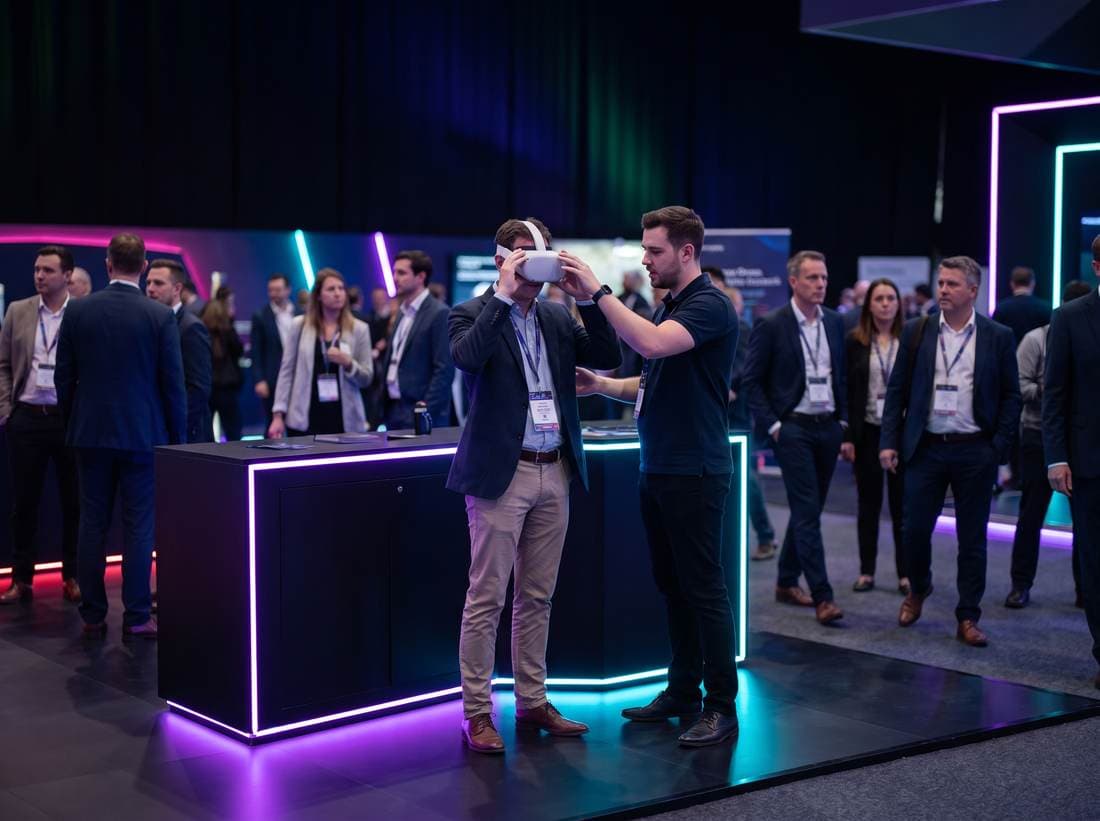
The stand people queue at
Exhibition maths is brutal: no dwell time, no conversations. A hosted VR station gives visitors a reason to stop — and a leaderboard gives them a reason to come back before the hall closes.
Dwell time is the whole game
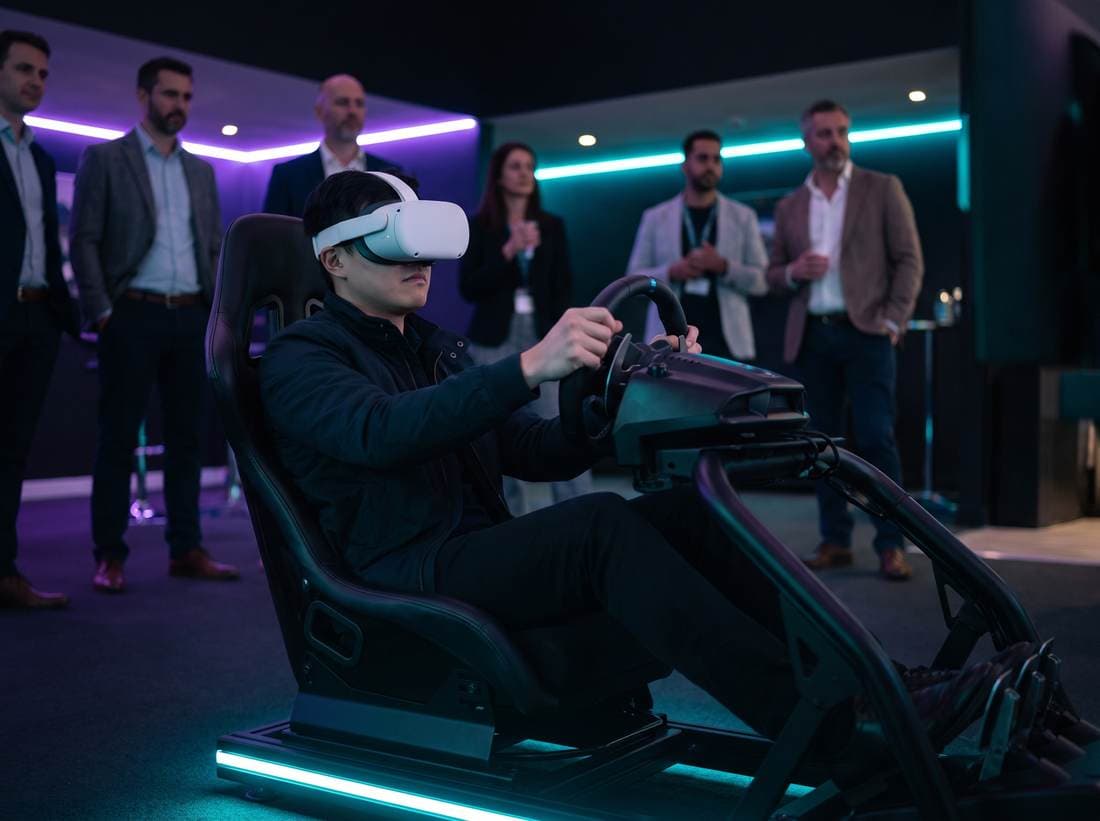
Every exhibitor in the hall is fighting for the same eight seconds of walking-past attention, and most stands lose it to a bowl of branded sweets. A racing rig with live timing does something no pull-up banner can: it stops footfall dead, holds a crowd around the crowd, and keeps your stand visibly busy — which is itself the strongest signal on any show floor. Busy stands attract visitors; empty ones repel them. The station's real job is to make the first conversation happen.
The leaderboard then does the second job: it brings people back. A visitor who set the third-fastest lap at 11am returns at 4pm to defend it, and this time they bring a colleague. Your team spends the day talking to people who are already standing still, already warmed up, and already slightly competitive — the easiest opening any salesperson gets all year.
It's honest lead capture too. Entering the leaderboard means leaving a name, and a prize for the day's fastest lap gives visitors a real reason to leave a badge scan with it. No fishbowl of business cards, no 'drop your email for the newsletter' — a competition people actually want to enter.
Spec'd to your stand, not to a brochure
Exhibition builds live and die on details that never appear in marketing decks: the stand's usable footprint after furniture, what your power order actually covers, which day is build-up and which dock your contractor has been allocated. Give us the hall and stand number and the setup gets spec'd to the space you genuinely have — one crowd-stopping station on a 3m × 3m shell scheme, or a multi-station build with a spectator screen on space-only.
We handle the venue side as standard: dock slot coordination, build-up and breakdown days, the organiser's contractor paperwork, and insurance certificates sent ahead of the deadline rather than chased on the morning. One standard socket runs a station, so a basic power order covers it — and we'll tell you before you order if your plan needs more.
Branding is where exhibition builds earn their keep: the leaderboard, the spectator screen and the prize framing can all carry your identity, so the crowd around your stand is watching your name all day.
Which sports work on a stand
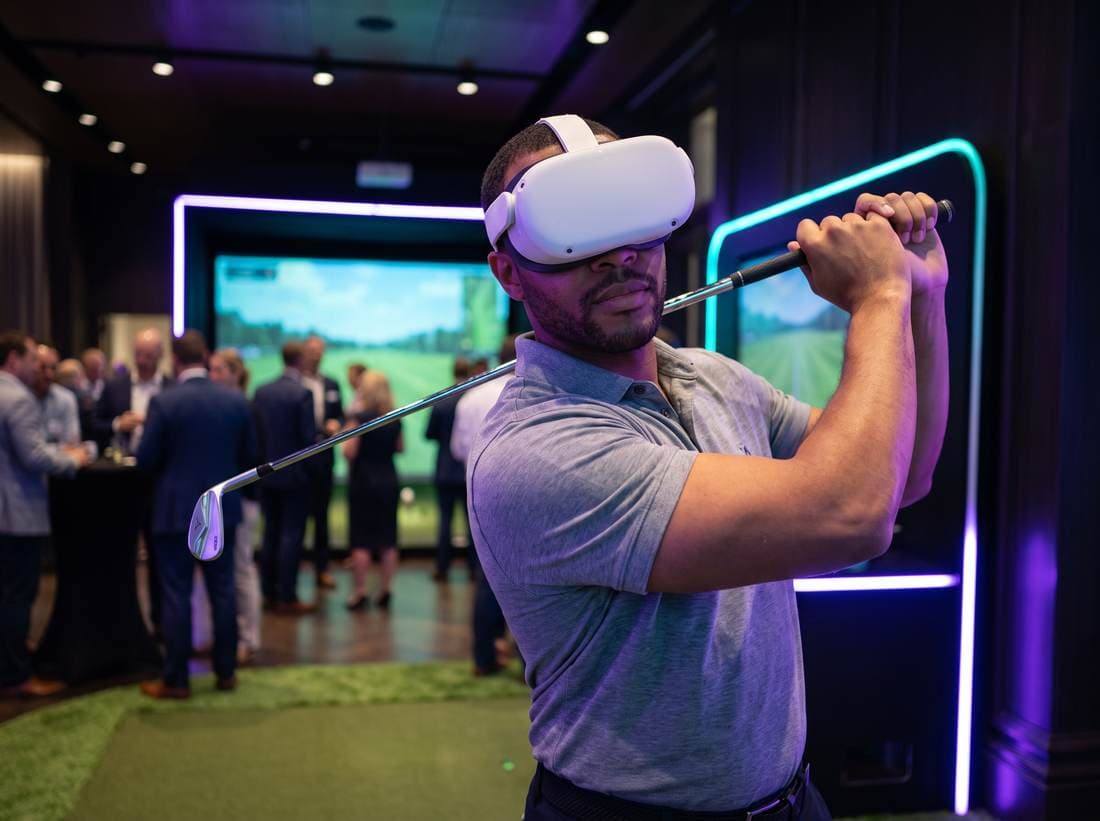
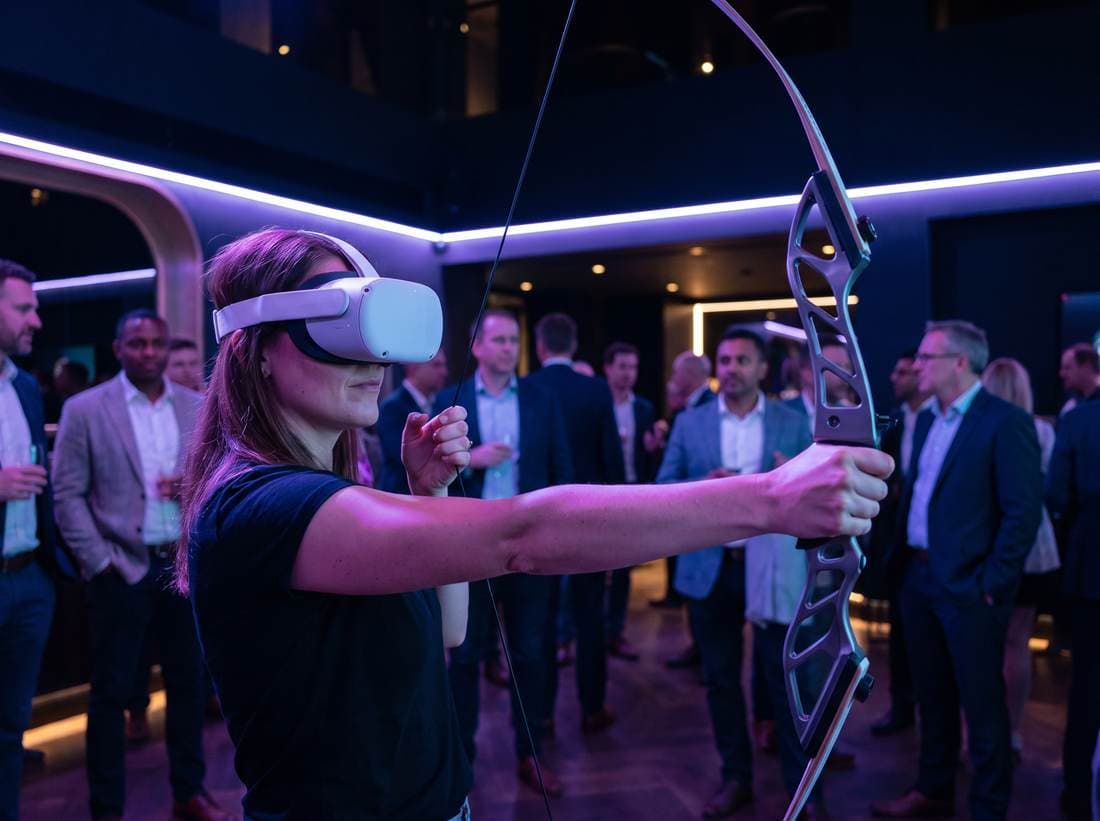
Racing is the exhibition banker — a rig with a wheel is legible from thirty metres, the ninety-second format keeps the queue moving, and live timing gives the crowd something to argue about. Golf runs a close second, especially at corporate-heavy shows where closest-to-the-pin is a competition visitors already understand. Archery suits narrower stands; it's compact, dramatic to watch, and the sudden-death format creates the loudest ten seconds in the hall.
A multi-day show changes the format rather than the kit: daily prizes reset the leaderboard each morning, so day three's visitors get the same live competition day one's did, and your team gets a fresh reason to invite people back at every scan.
The sports that earn their place
All eight experiences run at any event — these are the ones this occasion books most.
Asked before every booking
What's the smallest stand this works on?
What power do we need to order?
Do you handle the organiser's paperwork?
Can the leaderboard capture leads?
Does it run all day without a break?
Multi-day shows — how does pricing work?
Send your hall and stand number
The build gets spec'd to your exact footprint and power allowance, with anything the organiser needs flagged early, and get an itemised quote back within one working day.
Quicker by phone? 020 3411 1264
Roughly how many guests?
This decides how many stations you need — the main thing that moves a price.