Comparisons
VR Hire vs Silent Disco: Two Headsets, Different Nights
Published 31 July 2026
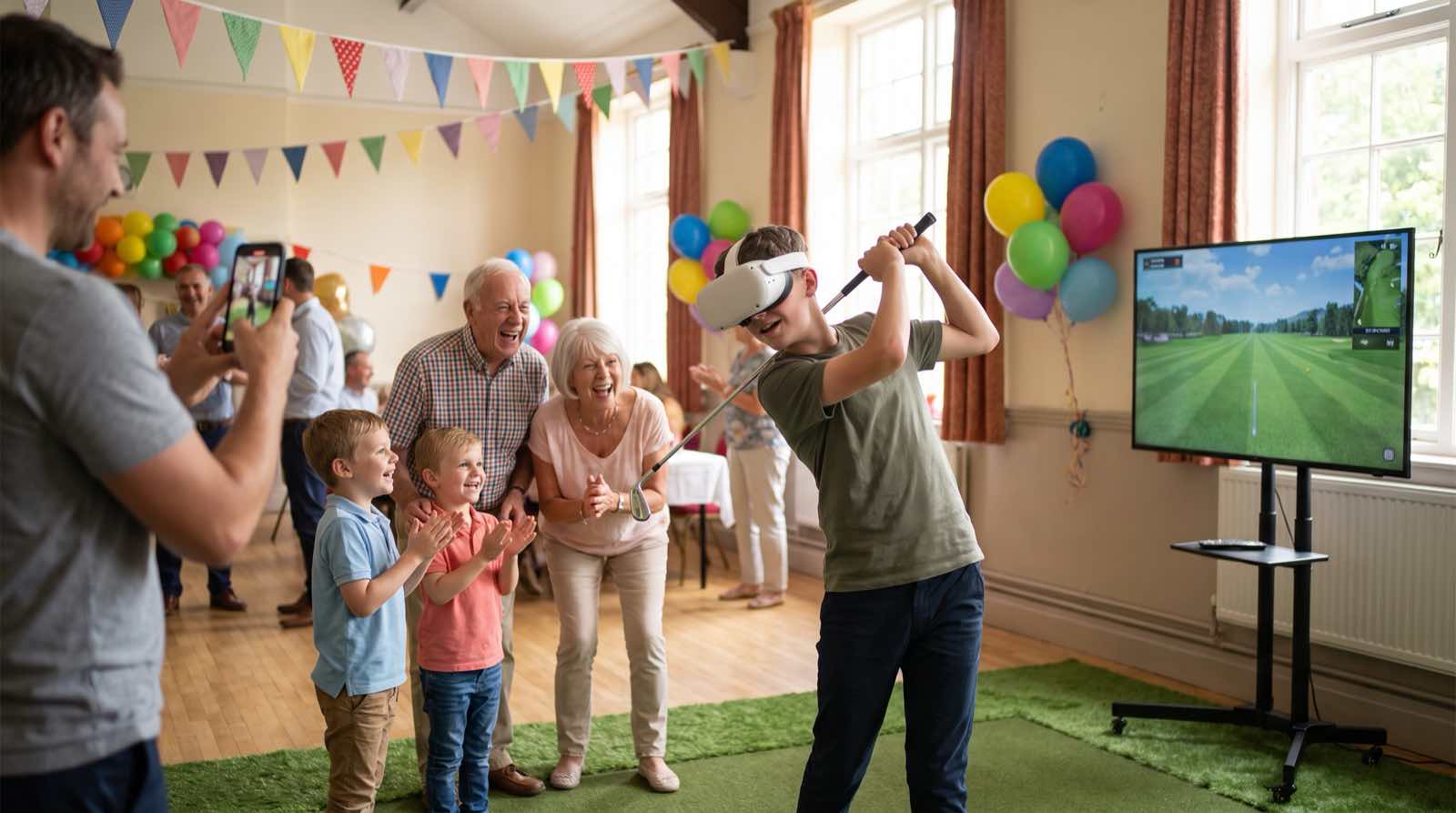
It's the only corporate-entertainment comparison where both options involve putting technology on your guests' heads. A silent disco hands out wireless headphones and three channels of music; we hand over a VR headset and a scoreboard. Both solve real venue problems, both photograph brilliantly, and they fail in completely different ways. As the VR side of this argument, we have obvious skin in the game — so this comparison sticks to the operational facts a booker actually needs.
Two different problems being solved
Silent disco is a sound-engineering solution that became a party format. Its killer application is noise: venues with residential neighbours, multi-use spaces, late licences that music restrictions would otherwise strangle. Three DJ channels through headphones mean a full dance floor at midnight in a building where a speaker would end the night at ten. The channel-switching becomes its own game — half the room singing one song, half another — and the sober spectacle of a silent room dancing is genuinely funny.
Hosted VR solves an energy problem rather than a noise one. It gives a party a competitive centrepiece — something to do and watch and argue about that isn't dancing or drinking — and it works precisely in the hours when dancing hasn't started or guests won't. The two formats barely compete on function; they compete on budget line and floor space, which is why the comparison matters at booking time.
The operational comparison
| Silent disco | Hosted VR | |
|---|---|---|
| Typical UK price | £300 – £700 (100 headsets, 2–3 channels) | From £395; multi-station from £795 |
| Solves | Noise limits, curfews, shared venues | Dead hours, flat energy, mixed groups |
| Time of night | Peak — after 9pm | The build — 7pm to 10pm |
| Participation shape | Everyone at once, no turns | Rotating turns, everyone watches |
| Needs from venue | Charging station, DJ or playlists | 3m × 3m and a socket |
| Staffing | Often dry-hire; DJs extra | Host always included |
| Hygiene overhead | 100 shared headbands | Wiped + fresh liners per turn |
| Failure mode | Dead channels, flat first hour | Queue mismanagement (host's job) |
Silent disco pricing is the mainstream UK hire market, July 2026 — dry-hire kits at the bottom of the range, hosted packages with DJs at the top.
Where silent disco genuinely wins
- Noise-restricted venues, no contest. If the venue caps decibels or the licence dies at 10pm, headphones are the difference between a party and an early night. VR offers nothing here.
- Big dance-first crowds. Two hundred people who came to dance need a dance floor, and channel-switching keeps three musical tribes happy at once — no single DJ playlist ever manages that.
- Festivals, weddings and multi-space events. A silent disco drops into a barn, a marquee or a hotel's second room and creates an after-hours zone without a sound system war.
- Late-night second winds. When the main band finishes and half the room wants more, headphone channels extend the night without renegotiating the licence.
Where VR carries it
- The pre-dancing hours. No party dances at 7:30. A tournament owns that build-up stretch — qualifying through dinner, finals as the energy peaks — then hands a warmed-up room to the music.
- Groups that won't dance. Every company has them: the contingent for whom a dance floor is a threat. Scored turns with a controller are an invitation they accept, and the Christmas party format was effectively designed around them.
- Daytime and conference settings. A silent disco at 2pm is a curiosity; a tournament at 2pm is a functioning team event. Only one of these formats survives daylight.
- Producing a story. Dancing is a great night out but a poor anecdote. A leaderboard upset — the intern beating the director in a final the whole room watched — is the thing still being mentioned in February.
The pairing nobody expects to work
These two formats are arguably better together than either is with anything else, because they occupy strictly sequential hours. The tournament runs the early evening — arrival energy, dinner lulls, the competitive build, finals around nine — and the silent disco inherits a room that's already loud, already mixed, and legally obliged to quieten down. Several of our winter bookings run exactly this double bill, and the handover moment (headsets off, headphones on) is smoother than any DJ transition. Budget both and you've covered an entire evening's energy curve for under £1,500; the cost guide breaks down what each market charges if you're pricing the double.
The photo test
One practical lens for marketing-minded organisers: what does each format leave on camera? Silent disco photography is genuinely great — a hundred people mid-dance in glowing headphones is an instantly recognisable image, though every silent disco photo looks broadly like every other one. Tournament photography is more specific to your night: the winner's arms aloft, the crowd reacting to a near-miss, the leaderboard with your colleagues' actual names on it. For an internal culture deck, the disco's crowd shots win; for a story people share themselves, the named moments travel further. Neither needs a hired photographer — both formats produce their best material on guests' phones.
Booking questions for each
For a silent disco: how many headsets over your headcount (spares matter — headbands break and batteries die), how many channels and who programs them, whether it's dry-hire or staffed, and what the charging plan is for a long night. For VR: whether the host runs a genuine tournament or just supervises the kit, what the throughput is per hour honestly, how hygiene between users works, and whether the leaderboard and finals moment come standard. In both markets the equipment is commodity; the running of the room is the product you're actually comparing.
FAQs
Which is cheaper — silent disco or VR hire?
Does a silent disco actually work for a work party?
Can you run VR and a silent disco at the same event?
Which needs more from the venue?
What group size suits each?
Planning the event this guide describes?
Date, headcount, city — quotes back within one working day.