Birthdays
VR Birthday Parties: A Straight Guide for Parents and Planners
Published 27 July 2026
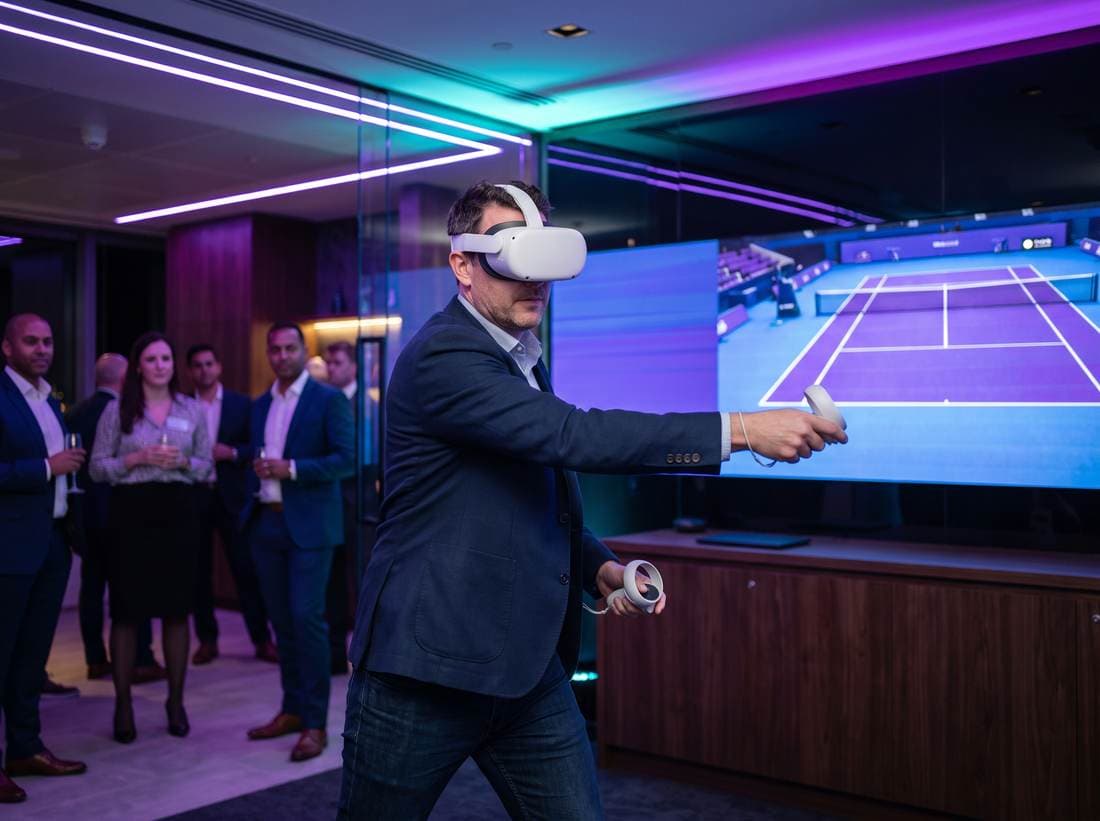
VR birthday parties have gone from novelty to normal in about five years, and the market has filled with operators of wildly varying quality. Some bring four headsets and a genuine host. Some drop off a console and leave. This guide covers what you're actually buying, what it costs, how many children one setup realistically entertains, and the questions worth asking before you pay a deposit — whether the birthday is for a nine-year-old or a fortieth.
What a VR party actually involves
A mobile VR party means someone arrives at your house, hall or venue with headsets, a screen and the kit to run them, sets up in about an hour, and hosts the session — fitting headsets, teaching each guest, running the games and managing whose turn it is. That last part is the whole job. Anyone can plug in a headset; keeping twelve excited children fairly rotated for ninety minutes is a skill.
The screen matters more than parents expect. Without one, everyone not wearing a headset is watching a person wave their arms in silence. With one, the whole room sees what the player sees, which is what turns a queue into a party.
What it costs in the UK
| Type | Typical UK price | Guests | Duration |
|---|---|---|---|
| Mobile kids party package | £150 – £380 | 8–20 children | 60–180 minutes |
| Venue-based, per head | £20 – £40 per child | Varies | Usually 2 hours |
| Adult birthday, hosted evening | £300 – £450 | Up to ~30 | 2–4 hours |
| Our evening package | From £395 | Up to ~30 | 2 hours, one experience |
Market ranges from our July 2026 survey of published UK operator pricing.
Kids parties are the most transparently priced corner of this market — around three-quarters of operators publish real numbers, which is refreshing after the corporate end where almost nobody does. Expect tiered packages by guest count and duration, midweek discounts of up to a third, and a travel charge beyond a local radius. The full market picture is in our cost guide.
How many guests one setup really entertains
This is where parties go wrong. A single station cycles roughly 15 to 20 guests an hour on short turns. So one headset and fourteen children over ninety minutes means each child plays for about six minutes total — and spends the rest of the party waiting.
Two stations halves the wait and roughly doubles the perceived value. For anything above a dozen guests, ask specifically how many simultaneous stations you're getting rather than how many headsets exist in the van. Those are different numbers and some operators are vague about which one they're quoting.
Age guidance, honestly
- Under 8: most headset manufacturers set a minimum age of around 10 and it's worth respecting. Younger children also struggle with headset fit, which spoils the experience anyway.
- 8–12: the sweet spot for a VR party. Enthusiastic, fearless, and the short-turn format suits their attention span perfectly.
- Teenagers: competitive and quick to learn, so lean into scored formats and a leaderboard rather than free play.
- Adults: the same formats work, with more heckling. Milestone birthdays are one of our most common evening bookings.
Motion sickness affects a small minority, most commonly with racing. A decent host offers a gentler experience rather than pushing through it, and nobody should feel they've failed at a party game.
Space, power and the practical bits
One station runs in a cleared 3m × 3m — a lounge with the sofa moved, a village hall corner, a garden room. Power is a single standard socket per station, the same as a kettle. Ceiling height matters more than floor space for some games, so mention low ceilings and pendant lights when you book. Our space and power guide has the full detail.
Marquees and garden setups work given firm level ground, cover from rain and a power lead from the house. Grass settles unevenly as the day warms, so boarding helps.
Questions worth asking before you book
- How many stations run at the same time, not how many headsets you own?
- Is a host included for the whole session, or just setup?
- Is there a spectator screen?
- How are headsets cleaned between guests?
- What's the deposit, and what happens if we cancel?
- Is travel included, and to what radius?
Any operator worth booking answers all six without hesitating. If a quote can't survive that list, it wasn't a price — it was an opening position.
Fitting it around the rest of the party
VR works best as one part of a party rather than the whole of it. Ninety minutes of headset time alongside food and cake makes a full afternoon; three hours of nothing else becomes a queue with snacks. For younger children in particular, a break between rounds keeps the energy up rather than letting it curdle.
The natural running order is arrival and free play, a scored round or two once everyone has had a go, then food, then a short final with a prize. That gives the party a shape and an ending, which is the thing most children's parties are missing when they fizzle out twenty minutes early.
Which experiences suit a birthday
[VR Tennis](/vr-tennis) and [VR Archery](/vr-archery) are the two that consistently work best for mixed-age groups — quick rounds, easy to grasp, funny to watch. [VR Golf](/vr-golf) suits adult birthdays particularly well. [VR Racing](/vr-racing) is the most exciting and the one to pair with something gentler so nobody's stuck. For a bigger group, the [Virtual Sports Day](/virtual-sports-day) format turns a party into a tournament with medals, which for a certain age is the entire point.
Planning one? Send us the date, the age group and rough numbers and we'll tell you honestly how many stations it needs.
FAQs
What age is VR suitable from?
How many children can one VR party entertain?
Can you come to our house?
Do you clean the headsets between children?
What if a child feels unwell in the headset?
Planning the event this guide describes?
Date, headcount, city — quotes back within one working day.